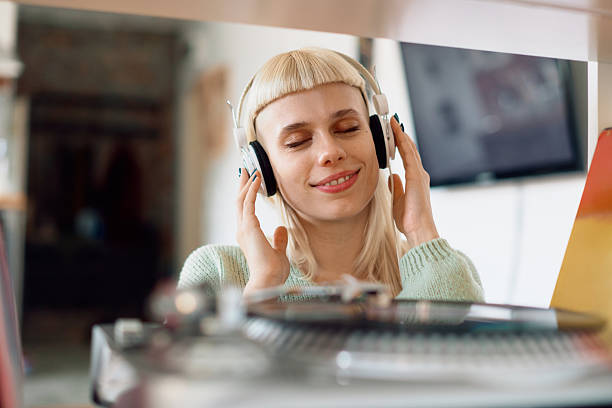
You know the drill. You’re doomscrolling at 2 a.m., half your brain turned off, the other half autopiloting through endless loops of dance challenges and audio teasers. Then it hits—that bassline. That weird reverse snare. That vocal chop that feels like it was ripped straight from your own private stash of unfinished projects. Before you can even process it, the comments are already screaming “ID PLEASE” and the creator is a bedroom producer with 40 followers who somehow just cooked up the most infectious eight seconds of the year. This isn’t a fluke. This is the new pipeline. Welcome to the bedroom producer economy, where TikTok isn’t just a promotion tool anymore—it’s the actual production floor.
Remember when the dream was simple? You’d spend night after night tweaking serum presets, layering kicks, and obsessing over mixdowns until your track sounded good enough for a club system. Then you’d hope a DJ with a real following would slip it into a set, and maybe, just maybe, Shazam numbers would spike and the algorithm gods would smile upon you. That era is gone. The club is still special for the experience, but the real gatekeeper now is a scrolling inertia that decides in 1.5 seconds whether your art deserves attention or becomes another skipped frame. As a result, the entire craft of beat production is bending toward the hook. Not the chorus, not the breakdown, not the long-form narrative arc of a traditional dance record. The hook. The memeable, duet-able, stitchable moment that makes someone physically move their thumb to follow you.
This shift is rewriting how bedroom producers actually work. Instead of starting with a groove or a chord progression, many now start with a “TikTok beat”—a stripped-down loop with an iconic sound design or a lyrical one-liner that begs to be looped. Think about all those “I made a beat out of a squeaking chair” videos. They’re not just showcasing skill; they’re building a narrative around the production itself. The producer becomes the protagonist, the process becomes the content, and the track becomes a side quest. It’s a fundamentally different mindset from the classic “finish your track, then market it” school. Now, you market the birthing of the track, and if the algorithm latches onto that birth, you’ve essentially bypassed every A&R, every playlist curator, every radio gatekeeper who used to control the supply chain between your bedroom and the world’s eardrums.
Financially, it’s a minefield laced with potential gold. The bedroom producer economy has always been driven by a mix of hope and hustle. You might sell a few beat leases, collect a pittance from streaming, maybe land a sync placement if your track somehow finds a licensing agency. But TikTok adds a new layer of absurdity: a platform where a track can rack up millions of uses in aesthetic vlogs and gym montages, yet the actual royalties amount to pocket change. Instead, the currency becomes visibility. That visibility then translates to DJ requests, label emails, even actual touring—which is where the real money still lives for most under-the-radar artists. So you see bedroom producers acting like full-time content strategists, posting three times a day, hopping on trends, even creating “producer versions” of popular sounds just to stay relevant. The phrase “it’s not personal, it’s business” has never felt more algorithmic.
But there’s a darker side to this short-form addiction. The relentless pressure to produce viral moments can eat away at musical identity. When every synth patch is chosen for its potential to sound good in a vertical video with loud bass on phone speakers, you end up with a homogeneous sonic world. The weird, the slow, the ambient, the deep cuts—they don’t survive the scroll. That genre fluidity that defined the golden age of bedroom producers? It’s being flattened into a narrow band of tempo-synced, bass-boosted, TikTok-optimized loops. And the mental health toll is real. Chasing the algorithm’s fickleness is a recipe for burnout, especially when you’re already wrestling with the isolation of producing alone. The bedroom, once a sanctuary, can become a pressure chamber where every jam session feels like a job interview for a position that doesn’t even exist.
Despite all that, this weird little economy is alive and thriving. It’s democratized access in ways we never imagined a decade ago. A kid with a cracked laptop and a cheap MIDI keyboard can reach more ears in a week than Larry Levan did in a lifetime at the Paradise Garage. The tools are cheaper, the distribution is instant, and the feedback loop is brutally honest. We’re moving into a future where the line between DJ, producer, and content creator is so blurry it might as well be smudged. The bedroom producer of tomorrow isn’t just a musician. They’re an editor, a meme lord, a meme themself, a therapist to their own anxiety, and a wizard of the 15-second format. So if the algorithm has decided that your life’s work is just a brief wobble in someone’s feed, don’t hate the player. Hate the game, then remix the game. That’s what the bedroom has always been about.