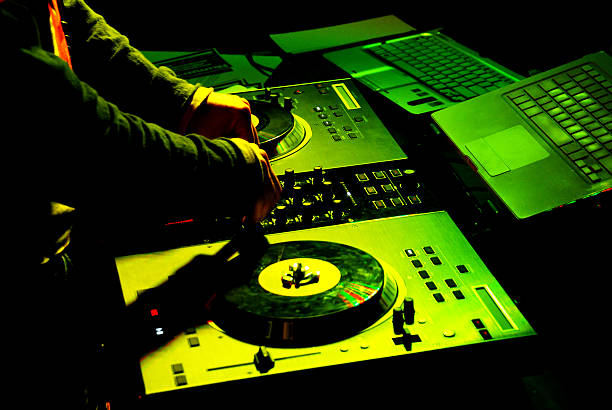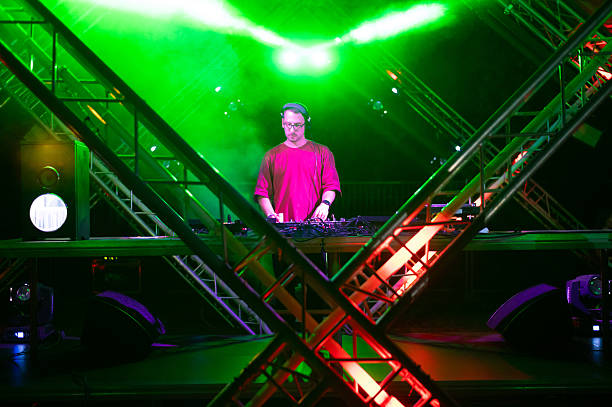
The booth has always been a weird little laboratory. Two decks, a mixer, a crate of records or a USB stick, and a DJ making a hundred tiny decisions per minute. AI is sliding into that space not as a robot replacement but as a copilot. Think less HAL 9000 and more a hyper-nerdy friend who has memorized every track you own, knows the mood of the room, and can suggest the next banger before you even realize you need it.
Real-time track suggestions are probably the most visible shift. DJ software like rekordbox, Serato, Traktor, and newer AI-forward platforms can scan your library and spit out options based on key, BPM, energy, vocal density, and even lyrical vibe. Now an algorithm can say, “Yo, this 124 BPM deep house cut in F minor will glide perfectly out of the track that’s playing, and it’ll lift the energy by about fifteen percent without going full main-stage.“ That’s not cheating. It’s just faster digging. The DJ still chooses. The AI just expands the maybe pile.
Stem separation is another game-changer. You can pull apart a track into vocals, drums, bass, and melody in real time. That means live mashups that used to take hours in a DAW can happen on the fly. You can loop an acapella over a techno kick, strip out a cheesy drop, or blend two tracks that have no business being together. AI makes the stems clean enough to use in a sweaty club, not just in a bedroom experiment. For open-format DJs, this is huge. But the booth has always evolved. Larry Levan didn’t have sync or stems, but he did have a reel-to-reel and a willingness to break rules.
Crowd reading is where AI gets spicy. Cameras and mics can analyze movement, noise levels, even phone screens. The system might notice the floor is losing interest during a breakdown and suggest a quick switch to something with a heavier kick. Or it might detect that the room is locked in and tell you to let the loop ride. That’s powerful, but it’s also dangerous if you treat it like gospel. A good DJ feels the room: the eyes, the hands, the way people scream when a certain sample hits. AI can give you a nudge, but it can’t replace intuition. The best use is as a second opinion, not a boss.
Then there’s generative AI in the booth. You can create custom edits, risers, or ambient beds that fit the exact key and tempo of your set. You can ask an AI to make a version of a classic with a modern bassline, or generate a vocal hook that matches the vibe. This is where things get wild. It’s not just selecting music anymore. It’s making music live, in the moment, reacting to the crowd. Some DJs will use it to add texture and surprise. Others will ignore it completely. The point is that the booth is becoming a hybrid space: part archive, part laboratory, part improvisation stage.
But let’s talk about the elephant in the booth. AI can flatten taste. If everyone uses the same suggestion engine, sets start to sound samey. The algorithm loves what worked before. Real DJ culture has always been about risk: playing the weird track, the wrong track that somehow becomes right, the song nobody knew they needed. AI doesn’t feel nostalgia. It doesn’t know that a certain 2009 remix reminds you of a summer fling. It doesn’t understand why a room goes quiet for a classic. That’s human. That’s the sauce.
So the future isn’t AI taking over. It’s AI handling the busywork so DJs can be more human. Let it manage beatgrids, key detection, and stem prep. Let it suggest the next tune when your brain is fried at 3 a.m. But don’t let it pick the vibe. The booth is still a conversation between the DJ, the music, and the crowd. AI can be a translator, a hype assistant, a crutch, or a creative partner. The best ones will use it like a tool, not a religion. The future of DJing is not human versus machine. It’s human with machine, and the dancefloor is the judge.