For decades, DJing has been a stereo game: left, right, maybe a sub. But immersive audio formats are lowkey rewriting that rulebook. Dolby Atmos, Sony 360 Reality Audio, ambisonics, and object-based mixing are turning the dancefloor into a sphere. Instead of panning a vocal hard left or right, you can place it in front of someone’s face, behind their head, or floating above the crowd. It’s a new way to think about space, movement, and energy in a set.
For DJs, this means tracks stop being flat files and start feeling like LEGO sets. Stem separation lets you pull vocals, drums, bass, and synths apart in real time. Immersive formats let you place each piece wherever you want. Kick under the floor. Hi-hats circling overhead. A reverb tail drifting from the back of the room to the front. Club systems like L-ISA, d&b Soundscape, and Meyer Sound Spacemap already do this in high-end venues. A well-placed sound can make a drop hit harder or a vocal feel like it’s whispering in someone’s ear.
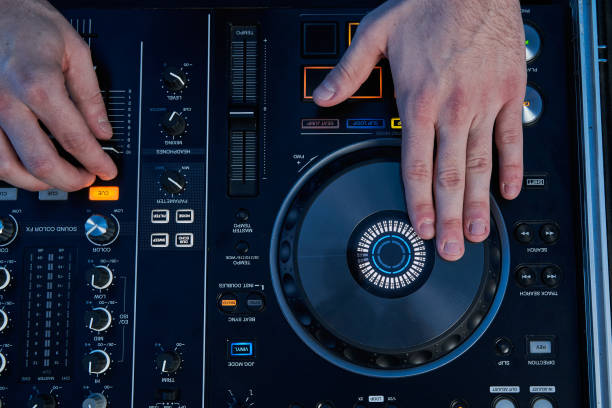
The catch is that most DJ booths are still built for stereo. CDJs, club mixers, and rekordbox are not exactly begging you to route eight channels into a 360-degree rig. So the current wave of spatial DJs is DIY AF. They’re using Ableton Live, Max/MSP, TouchDesigner, custom controllers, and Dolby Atmos renderers. Some map joysticks or MIDI faders to x, y, and z. It looks like a spaceship cockpit, but the goal is simple: make the crowd feel like they’re inside the track, not just standing in front of it.
The venue side is where things get expensive. To do immersive audio properly, a club needs speakers around the room, overhead, and sometimes under seats. It needs processing power, calibration, and someone who knows what they’re doing. That means not every basement club will become an Atmos wonderland overnight. But festivals, art spaces, pop-ups, and forward-thinking venues are already testing it. Binaural headphone experiences with head tracking are another gateway. You can simulate a 3D club on a pair of AirPods Max.
There are real challenges. A mix that sounds goated in a 3D room can sound mid in earbuds or on a phone speaker. Latency can make live stem manipulation feel laggy. File management gets messy when every track has a dozen objects. And crowds are not NPCs. They came to dance, not to sit through a tech demo. If you move sounds around too much, it can feel gimmicky. The dancefloor still needs physical bass, clear rhythm, and a vibe that keeps people locked in.
But the creative potential is massive. DJs can become spatial composers. Imagine a techno set where a loop starts in the back left, travels around the room, then explodes into the center for the drop. Imagine an ambient set where each chord change comes from a different corner. Imagine a vocal sample that circles the crowd like it’s checking who’s ready. Immersive audio can also make live sets more accessible for people with hearing differences, because directional cues and head-tracked mixes can help separate elements. That’s not just cool. That’s meaningful.
The future will not be all-or-nothing. Stereo isn’t going anywhere. Immersive audio is another tool in the bag. But as more producers release spatial versions and stem packs, and as controllers get cheaper and weirder, spatial DJing will stop being a niche flex and start being a skill. The best DJs will use it with restraint. They’ll know when to keep it simple and when to send a synth flying around the room. The goal isn’t to show off. The goal is to make the room feel like one organism.
So if you’re a DJ who wants to stay ahead, start messing with immersive audio now. Try a binaural plugin. Split some stems. Map a fader to movement instead of volume. Play with space like it’s an instrument. The future of DJing is not just louder or cleaner. It’s wider, deeper, and a little more weird. And honestly, that sounds exactly like the kind of party worth going to.